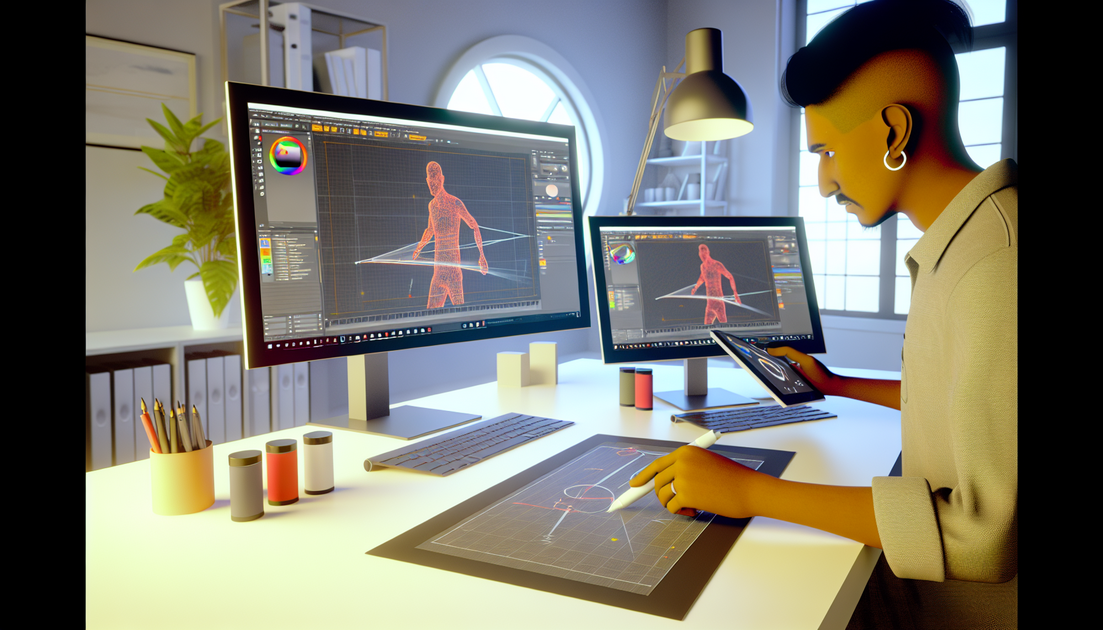
Anthropic’s new creative anthropic creative connectors – connectors didn’t arrive with fireworks or celebrity endorsements. They appeared, almost modestly, as a list of integrations: Adobe Creative Cloud, Blender, Autodesk Fusion, Ableton, Splice, Affinity, SketchUp, Resolume, and something called Claude Design. But behind that list sits a quiet shift in how creative work may be done—and, more subtly, how creators understand their own tools.
The Strategic Shift Behind Anthropic Creative Connectors
For years, the conversation around AI and creativity has bounced between two poles. On one side: the vision of all-in-one platforms that generate images, videos, or music at the click of a prompt. On the other: the cautious professionals who live inside Photoshop or Blender for hours each day, shaping detail by hand. Anthropic’s approach lands squarely in the second camp. Instead of building its own creative sandbox, Anthropic built bridges—connectors that let its model, Claude, operate inside existing professional software. It’s an intelligence layer, not a replacement.
That’s a subtle but meaningful distinction. OpenAI, for instance, has been developing image and video generation tools built directly into ChatGPT. Anthropic’s route assumes professionals don’t want to abandon their workflows; they want to augment them. The connectors allow Claude to, say, adjust lighting in Photoshop, modify a 3D mesh in Blender’s Python API, or re-sequence audio in Ableton—all through natural language. It’s automation that respects craft.
When I first read the announcement, I thought of the early days of MIDI in the music world. It didn’t replace musicianship; it standardized communication between instruments. In a sense, Anthropic’s connectors do something similar—standardizing how intelligence flows between human and machine inside creative ecosystems.
Why This Matters for the Creative Industry
These connectors target professionals, not hobbyists. That’s important. The consumer-facing creative AI market—apps that generate avatars, lip-syncs, or short videos—has grown explosively, but it’s built for speed and accessibility, not precision. Anthropic’s integrations, by contrast, feel like infrastructure. They’re meant for people who already know what a node tree is or how a color profile behaves when exported to film.
This distinction reveals a deeper divide forming in the creative industry:
- Consumer creative AI aims to make everyone a creator. It compresses skill barriers and favors immediacy.
- Professional creative AI aims to make experts faster and more fluid, without flattening their process.
Both are legitimate, but they serve different instincts. One democratizes creativity; the other extends mastery. The fact that Anthropic has partnered with design schools like RISD and Goldsmiths suggests it sees this as an educational shift as much as a technical one. Future designers may not learn to “use AI” as a separate module—they’ll learn to collaborate with it inside their existing tools.
Inside the Studio: A Micro-Story
Last week, a friend of mine who works in motion graphics told me about a late-night project. She had 48 hours to deliver a 90-second animation, and her team used the new Claude–Blender connector to script repetitive camera paths and adjust lighting sequences without touching the code directly. “It wasn’t that Claude did the creative part,” she said, “it just cleared the mess between my idea and the tools.” She still did the design work, but she finished early enough to sleep. That’s a small story, but it captures the point: AI as workflow lubricant, not auteur.
Anthropic Creative Connectors and the Broader Ecosystem
This move also places Anthropic in a different posture toward the creative economy. By becoming a Blender Development Fund patron and embedding itself in curricula, the company is signaling long-term participation rather than a marketing experiment. It’s a bet that creativity will remain tool-centric, and that professionals will prefer augmentation over automation.
In contrast, OpenAI’s Sora project—text-to-video generation—takes a more cinematic, end-to-end route. It imagines a future where you describe a scene and the system builds it. Anthropic’s connectors, meanwhile, imagine a workflow where you describe a scene, and your tools respond intelligently within your control. These are not competing goals so much as parallel philosophies. One favors full generation; the other favors collaboration.
I’ve seen similar divides in other industries too. In software development, for example, GitHub Copilot doesn’t replace coding—it accelerates it. In video editing, tools like Runway aim to do the whole process for you, while others like Descript embed AI features inside traditional editing. The creative world is simply catching up to that same dichotomy.
Limits, Gaps, and the Remaining Divide
That said, this new infrastructure doesn’t address every layer of the market. These connectors still assume technical literacy. They won’t help someone who just wants to make a TikTok filter or an animated portrait. Consumer creative platforms—like Canva’s growing AI suite or Magic Hour’s video tools—remain the territory for that. The question is whether Anthropic will eventually bridge the gap between these layers or stick to the professional end.
There’s also the matter of control and accountability. When an AI acts inside professional software, who owns the result? If Claude runs a batch of edits across a thousand assets, can it make creative decisions that accidentally overwrite work? These are practical questions, and the answers will likely vary by context. For now, it appears Anthropic is leaving the human firmly in charge, but as connectors evolve, the line could blur.
And of course, the creative process isn’t just technical—it’s emotional. Many artists see their relationship with their tools as part of their identity. An AI assistant editing your timeline or retouching your image might feel efficient, but it also changes the rhythm of how you think. I’ve found that even small automations can subtly alter where your attention goes, and that’s both exciting and unsettling.
Looking Ahead: A Redefinition of “Creative Work”
Over the next year or so, I expect to see two paths develop in parallel. Professional studios will increasingly integrate AI copilots into their standard tools—Claude in Adobe, Copilot in Office, and so on. Meanwhile, consumer platforms will continue abstracting creativity into prompts and templates. The interplay between these layers could reshape how creative assets move: professional-grade renders flowing into social content, and viral trends feeding back into professional aesthetics.
It’s tempting to frame this as a battle between human and machine, but that misses the texture of what’s happening. What Anthropic has done with its connectors is to make AI less visible—less of a spectacle, more of a collaborator. And that, perhaps, is the deeper cultural shift. When technology stops demanding attention and simply becomes part of the workspace, it starts to change the craft from within.
Whether this shift will make creativity richer or more standardized is still unclear. But for now, it feels like a return to something more grounded—a reminder that tools, however intelligent, are still at their best when they serve the maker, not the other way around.
Leave a Reply