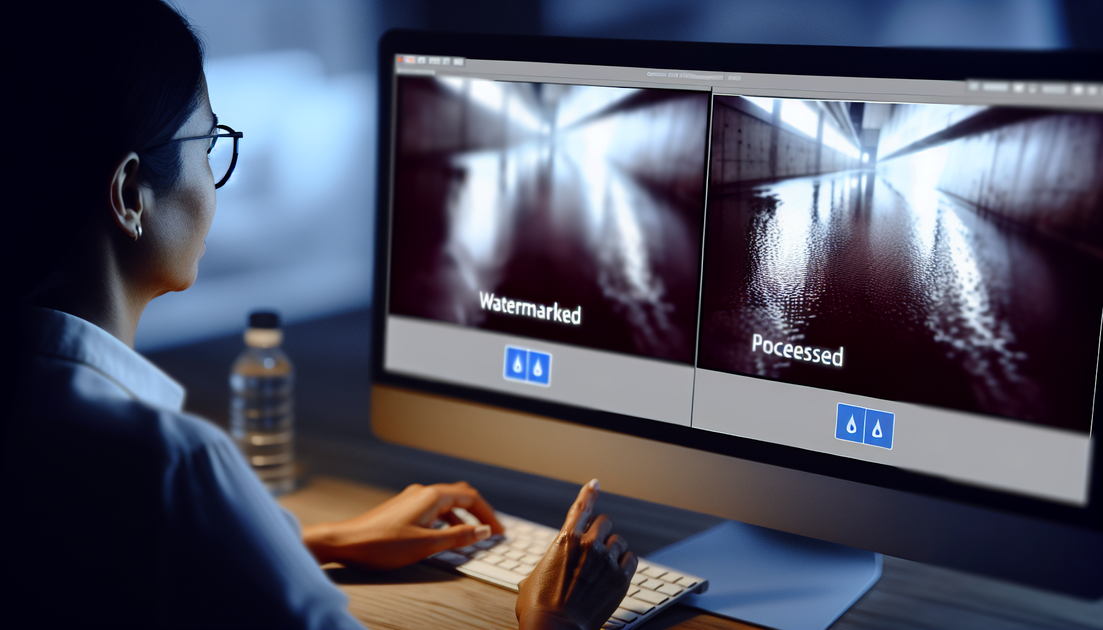
Late one night, a researcher named LiteratureAcademic34 posted something that made many in the AI community pause. They claimed to have found a way to bypass AI image watermarks embedded by Google DeepMind’s SynthID system—technology used in models like Nano Banana Pro. The method wasn’t some dark-hat hack; it relied on diffusion-based post-processing, a toolset readily available in open-source AI workflows. The result: a watermarked image that looked nearly identical to the original, but no longer triggered detection.
Why Watermarking Matters More Than Ever
Imagine scrolling your feed during a breaking news event. You see a photo of a political figure in a compromising situation. It looks real. It’s shared thousands of times in minutes. Later, you find out it was AI-generated. This is exactly the kind of misinformation problem watermarks are meant to prevent. They embed invisible signals into pixels, allowing detectors to verify whether an image came from an AI model.
In theory, that should be enough. In practice, it’s not. The new disclosure around SynthID’s vulnerability shows how easily these signals can be disrupted. A few rounds of re-diffusion—essentially, using a generative model to “repaint” the same image—can scramble the watermark while keeping the content visually intact.
I’ve seen the same pattern in other forms of digital traceability. Once a detection method becomes public knowledge, someone inevitably tests how far it bends before it breaks. That’s not sabotage—it’s stress testing. And it’s necessary if we want robust systems.
How Diffusion-Based Bypasses Work on AI Image Watermarks
To understand what’s happening, it helps to picture how diffusion models work. These systems create images by gradually removing noise from random pixels, guided by a prompt or reference. When you feed an existing image into a diffusion model—asking it to “enhance” or “redraw” the same content—it doesn’t copy pixels; it reinterprets them. That reinterpretation can inadvertently wipe out the subtle watermarking patterns embedded in the original file.
Here’s a simplified breakdown of what’s likely occurring:
- Input: The AI model receives a watermarked image.
- Re-diffusion: The image is processed through a diffusion model, conditioned to preserve its appearance.
- Output: The resulting image looks identical to the naked eye, but the underlying pixel-level watermark is gone or heavily degraded.
Because watermark signals exist in frequency domains or pixel patterns invisible to humans, even minor perturbations can break them. It’s similar to how compressing an image can destroy steganographic data without visibly changing the picture itself.
In my own testing with open-source diffusion tools, I’ve noticed the same fragility. Even light denoising or resampling can alter enough of the data to confuse detection models. The challenge is that watermarking must survive every kind of post-processing—resizing, filtering, enhancement, format conversion—without losing integrity. That’s a tall order.
Practical Steps for Testing and Evaluating Watermark Robustness
If you’re developing or auditing watermarking technology, don’t rely solely on lab conditions. Do this instead:
- Test across workflows. Run images through different diffusion pipelines, not just one. Each sampler and model introduces unique noise patterns.
- Apply benign edits. Try resizing, compression, color correction, and light retouching. See when detection begins to fail.
- Compare detectors. Some detection tools may flag partial signals even after degradation. Others will not. Cross-comparison reveals weaknesses.
- Record failure modes. Log exactly what kind of processing breaks the watermark. This helps designers build resilience against real-world manipulations.
Many teams skip the last step, assuming that “close enough” is good enough. It’s not. Every missed detection is a potential misinformation vector. The point isn’t to make watermarks unbreakable—they probably never will be—but to make them fail in predictable, detectable ways.
What the SynthID Disclosure Tells Us
The researcher’s post isn’t a scandal; it’s a necessary wake-up call. SynthID is one of the most advanced watermarking systems currently in use, yet it still succumbs to post-processing that doesn’t require special skill or expensive hardware. That should concern anyone building trust mechanisms for synthetic media.
One key insight from this case is that watermarking shouldn’t be the only line of defense. Detection tools should combine multiple signals—metadata consistency, model fingerprints, and contextual analysis—to assess authenticity. Relying on a single invisible mark is like locking your front door but leaving the windows open.
Another lesson: public testing works. By openly sharing their workflow, the researcher invited the community to reproduce and analyze the findings. This kind of transparency, when handled responsibly, strengthens the field. I’d rather see vulnerabilities disclosed in the open than quietly exploited by those with less noble intentions.
Toward More Resilient AI Image Watermarks
The next generation of watermarking will need to think beyond static pixel embedding. Some researchers are exploring dynamic signals that change with context—like model-specific “signatures” that persist across generations, even after editing. Others are studying hybrid approaches combining watermarking with cryptographic attestation, where the model itself signs the image output in a verifiable way.
That’s promising, but there’s a trade-off. More robust signals often mean more computation, higher storage costs, and potential compatibility issues with existing image formats. And no matter how good the technology gets, human factors—like whether users bother to check authenticity—will always limit effectiveness.
Still, progress is possible. The disclosure around Nano Banana Pro and SynthID doesn’t undermine watermarking; it sharpens it. Each failure provides data, and each data point moves us closer to a system that can survive the messy realities of the internet.
The Less-Obvious Problem: Trust Fatigue
There’s one more layer to this story that’s less technical but just as important. When detection tools start producing false negatives or inconsistent results, people lose confidence in them. They stop checking. That “trust fatigue” can erode even the most well-designed systems.
In other words, transparency and usability matter as much as cryptographic strength. If users can’t easily verify authenticity—or if the verification process feels unreliable—they’ll default to intuition, which is the least reliable detector of all.
That’s the paradox of digital trust: it’s built on invisible signals that only work if people believe in them.
Final Takeaway
Diffusion-based post-processing has shown just how fragile invisible watermarking can be. But that fragility isn’t a failure—it’s feedback. Watermarks will only become resilient if they’re tested, broken, and rebuilt in the open. The real challenge isn’t just technical; it’s cultural. We need systems that earn trust, not just assert it.
Every invisible mark tells a story—but only if it survives the rewrite.
Leave a Reply