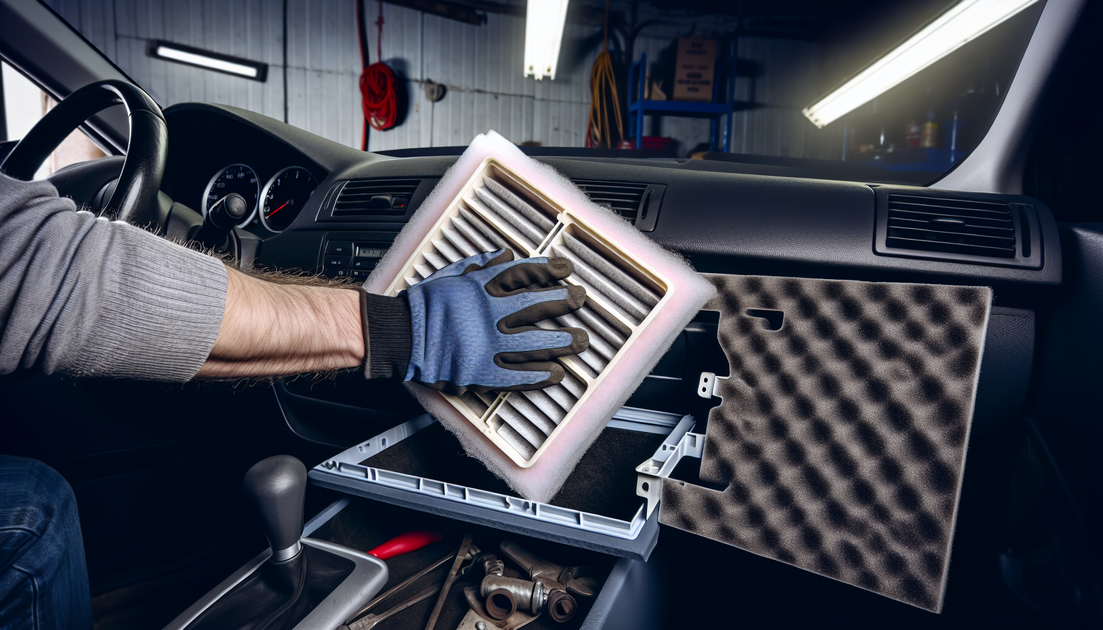
When a Reddit user discovered that their “new” cabin air filter was actually just a piece of foam, it struck a chord with thousands of car owners. It wasn’t just about fifty dollars—it was about trust, expertise, and the uneasy relationship many of us have with the people who maintain our machines. For something as ordinary as a filter, the story revealed a quiet anxiety that runs deep in modern car culture: the fear of being duped by a system we barely understand.
1. Expertise Has Become Invisible
Modern vehicles are sealed worlds of sensors, screens, and black plastic covers. Most of us don’t see what happens under the hood anymore, and that distance creates dependence. When a mechanic says you need a new part, you often have to take their word for it. The old habit of watching a repair happen, or even understanding what you were looking at, has largely vanished. That invisibility makes small betrayals—like a foam insert sold as a filter—feel bigger than they are. It’s not just the part that’s missing; it’s our confidence in the process.
I’ve noticed this even among friends who are otherwise self-reliant. They’ll rebuild a laptop or install a kitchen sink, but when it comes to cars, they hesitate. The technology feels opaque, and that opacity changes the power dynamic between driver and technician.
2. The Price of Convenience
In many cities, oil change chains and quick-service garages promise “complete” inspections in under an hour. It’s efficient, but efficiency doesn’t always mean transparency. The business model depends on upselling—filters, fluids, wipers—often before the customer can ask questions. If a cabin filter replacement costs $50, most people assume it’s the going rate. After all, time is valuable, and not everyone wants to crawl into the passenger footwell with a screwdriver.
But convenience has a hidden cost. When we stop participating in maintenance, even in small ways, we lose the ability to notice when something’s off. The foam filter incident might have gone undetected for years if the owner hadn’t decided to check for themselves.
3. A Micro-Story About Trust
Years ago, I took my aging hatchback to a corner shop that smelled faintly of rubber and burnt coffee. The mechanic—a man with permanently blackened fingertips—handed me my old air filter after changing it. “See this?” he said, knocking out a puff of gray dust. “You were breathing that.” He didn’t need to upsell me anything; his evidence was tangible. I paid the bill without flinching. That moment stuck with me because it illustrated what trust in a mechanic looks like when it’s earned in real time, not just assumed.
Compare that to a foam pad passed off as a filter. The customer isn’t just out fifty dollars—they’re robbed of that small, grounding moment of transparency.
4. Why Some Shops Cut Corners
There’s a charitable interpretation, though it’s not necessarily comforting. Some low-cost garages operate on razor-thin margins, juggling cheap parts and rushed schedules. A technician might substitute foam because the real filter wasn’t available, or because they were told to keep costs down. Others may simply not care. Without evidence, it’s hard to say which applies in any single case.
Still, these shortcuts speak to a larger pattern in service industries: the pressure to appear thorough while staying profitable. Restaurants swap ingredients; repair shops skip steps. Most customers never notice. But every time someone does, it chips away at collective trust a little more.
5. DIY Isn’t About Saving Money Anymore
Replacing a cabin air filter is one of the easiest car tasks—usually a five-minute job involving a glove box and a couple of clips. YouTube is full of tutorials. But what’s interesting is that the DIY movement has shifted from being purely about thrift to being about agency. People want to understand what’s happening to the tools they rely on. Even checking your oil or swapping a filter is a way of reclaiming some of that lost connection.
Many readers tell me that once they replaced one filter or spark plug, they started looking at other systems differently. It’s not about turning everyone into a mechanic; it’s about restoring a sense of participation. Cars used to invite that. Now they discourage it—with sealed batteries, proprietary software, and “dealer-only” service warnings. Small acts of maintenance are tiny rebellions against that design.
6. The Psychology of Being Overcharged
It’s easy to say, “It’s just $50,” but the sting goes deeper. When we pay for a product or service, we’re also paying for trust. Being overcharged—or misled—feels like being told we don’t deserve honesty. In behavioral studies, people report stronger anger when they’re deceived than when they simply lose money. That’s because deception implies contempt. It says: you won’t check, you won’t notice, and even if you do, it won’t matter.
In an era when most of our interactions are mediated by screens and invoices, those small deceptions feel personal. A foam filter isn’t just foam; it’s a reminder that someone assumed we weren’t paying attention.
7. Rebuilding Confidence, One Filter at a Time
So what can we do? A few practical ideas help restore balance:
- Ask to see old parts. Any reputable mechanic will show them without hesitation. It’s a simple accountability measure.
- Learn one small repair yourself. Start with something safe and visible, like a wiper blade or that same cabin air filter.
- Use your owner’s manual. It often lists exact replacement intervals and part numbers—useful for checking if a recommendation makes sense.
- Build a relationship with one trusted shop. Loyalty can be a form of protection; mechanics are more careful when they know you’ll be back.
These steps don’t eliminate the risk of being misled, but they make deception harder. More importantly, they pull us back into the process. I’ve seen people gain a quiet satisfaction from understanding the basics of their vehicle—something that turns anxiety into competence.
8. The Broader Lesson
The foam filter story isn’t shocking because it’s rare; it’s striking because it’s ordinary. It represents the small breakdowns of trust that ripple through daily life—between customer and business, expert and layperson, machine and human. Our cars have become extensions of ourselves, yet the systems that maintain them often feel alien. When someone slides a piece of foam where a filter should be, it’s not just bad service—it’s a metaphor for the gaps we’ve allowed to form between knowledge and convenience.
Maybe the answer isn’t outrage but curiosity. Check your car. Ask questions. Learn what you can. Because every time we bridge that gap, even a little, we make it harder for the foam filters of the world to slip through unnoticed.
And maybe that’s worth more than fifty dollars.
Leave a Reply