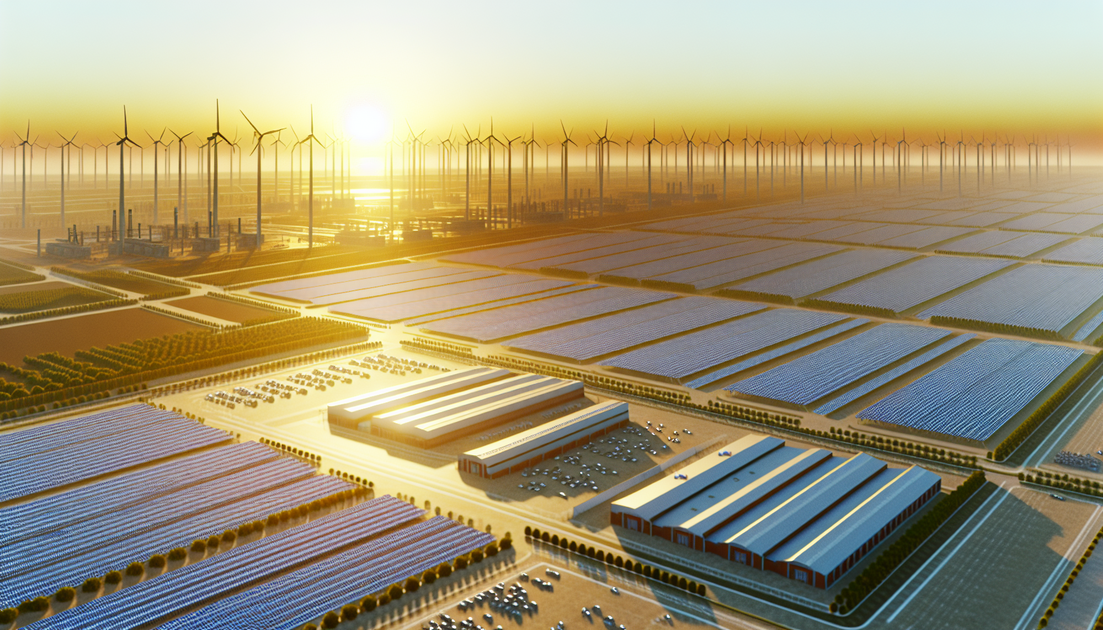
By 2026, the clean energy transition will no longer be a distant goal—it will be the backbone of the global economy. Solar panels, electric vehicles, and advanced batteries are moving from niche technologies to national priorities. And at the center of this shift stands China, whose dominance in clean technology manufacturing is helping its economy gain ground on the United States.
The long build-up to China’s clean energy dominance
China’s rise in clean energy didn’t happen overnight. Two decades ago, the country was known mainly as the world’s largest coal consumer. But after years of suffocating smog and rising energy imports, Beijing made a bet: that whoever mastered renewable manufacturing would own the future of energy.
That bet started paying off around 2010, when Chinese firms began flooding global markets with low-cost solar panels. Western manufacturers complained about subsidies and dumping, but the reality was simpler—China had built enormous scale. It had cheap labor, government-backed loans, and a coordinated industrial policy. Soon, the same playbook was applied to batteries, electric vehicles, and wind turbines.
Today, China controls more than 80% of the world’s solar supply chain and a majority of lithium-ion battery production. Even its domestic EV market has matured faster than expected. In 2023, Chinese automakers exported more cars than any other nation, many of them electric. I remember visiting a trade fair in 2019 and seeing a small Shenzhen-based startup showing off a battery pack the size of a briefcase. Four years later, that company was supplying components for major European automakers. It’s rare to see industrial transformation happen that fast.
How the clean energy transition is reshaping global economics
The clean energy shift has become more than an environmental project—it’s an economic realignment. The old model of fossil-fuel dominance, led by oil-rich nations and heavy industries, is being replaced by one built on technology, minerals, and manufacturing know-how. China’s role in this new order is both powerful and complicated.
On one hand, its leadership in clean tech has driven down costs worldwide. Solar modules that once cost hundreds of dollars now sell for a fraction of that. Electric cars are no longer a luxury item. Many developing countries can now afford renewable projects that were once out of reach. On the other hand, dependence on Chinese supply chains creates new vulnerabilities. A factory shutdown in Jiangsu can ripple through global solar markets within weeks.
For the United States and Europe, this has sparked a mix of admiration and anxiety. The U.S. Inflation Reduction Act (IRA) is the most ambitious industrial policy response so far, offering massive subsidies for domestic clean energy production. But even with that, Chinese firms still dominate key materials and midstream manufacturing steps. As one energy analyst put it to me over coffee last year, “You can’t build a clean energy supply chain without China—you can only decide how much of it you want to depend on.”
Real-world momentum and human-scale change
Behind all the charts and policy papers are tangible shifts in daily life. Last summer, a small coastal city in Fujian province converted its public bus fleet entirely to electric. The drivers told local reporters that their routes felt quieter and cooler—no more diesel fumes, no more rumbling engines. The city now saves millions annually in fuel costs. It’s a small story, but it captures what’s happening on a much larger scale.
I’ve seen similar transitions closer to home. A friend who manages a logistics company recently replaced part of his truck fleet with Chinese-made electric vans. The upfront cost was high, but the maintenance savings and stable electricity prices made the math work. “It’s weird,” he said, “we’re still importing the technology, but it’s the first time I’ve felt optimistic about energy costs.” That kind of practical optimism may be the quiet engine pushing this transition forward.
Trade-offs and the next wave of innovation
Of course, every transformation has trade-offs. China’s clean tech boom has come with environmental costs of its own—intensive mining for lithium and nickel, sprawling industrial zones, and energy-hungry manufacturing plants often still powered by coal. Critics argue that “green” products aren’t truly green if their supply chains are dirty. They’re not wrong, but the picture is evolving. In 2025, several major Chinese provinces plan to power more factories with renewable electricity, a subtle but crucial step toward genuine decarbonization.
Meanwhile, other countries are trying to carve out niches where they can compete. The U.S. leads in energy storage research and advanced materials. Europe is pushing for low-carbon steel and hydrogen. Southeast Asia and Latin America are emerging as battery material suppliers. The race isn’t zero-sum; it’s more like a complex relay, where leadership shifts depending on which technology baton is being passed.
One underappreciated change is happening in software. Battery management systems, grid optimization algorithms, and AI-driven energy forecasting—all of these are becoming the “brains” of clean energy infrastructure. China’s hardware advantage is massive, but software remains a global contest. I’ve noticed that many Western startups are quietly licensing technology to Chinese partners, not competing head-on but collaborating in hybrid ways. It’s a pragmatic kind of globalization, different from the old model of trade wars and tariffs.
The road to 2026 and beyond
By 2026, the world’s clean energy capacity will likely have doubled compared to 2020. China’s domestic market alone could account for half of that growth. The question isn’t whether the clean energy transition continues—it’s how equitable and resilient it will be.
Will other economies find sustainable footholds? Can global supply chains diversify without fragmenting? And will the benefits—cleaner air, lower costs, energy independence—reach the communities that need them most? There are no simple answers yet. But the trajectory is clear: energy is becoming more distributed, more digital, and more competitive.
For China, this moment is both an economic triumph and a geopolitical test. The same technologies driving its growth could also expose it to new pressures—trade restrictions, resource bottlenecks, and public expectations for cleaner production. For the U.S. and others, the challenge is to innovate fast enough to stay relevant in a market that rewards scale, speed, and sustainability all at once.
Conclusion: a new balance of power
The clean energy revolution isn’t just a climate story—it’s a power story, in every sense of the word. The nations that master it will shape the next century’s economy. China happens to be ahead right now, but leadership in technology is rarely permanent. Innovation tends to migrate toward whoever can adapt fastest and think longest-term.
As we move deeper into this decade, clean energy will stop being a “sector” and start being the system itself—the foundation beneath transport, manufacturing, and everyday life. And whether we view China’s dominance as a challenge or an opportunity, one thing is certain: the energy transition is speeding up, and the world won’t look the same when it’s done.
Leave a Reply