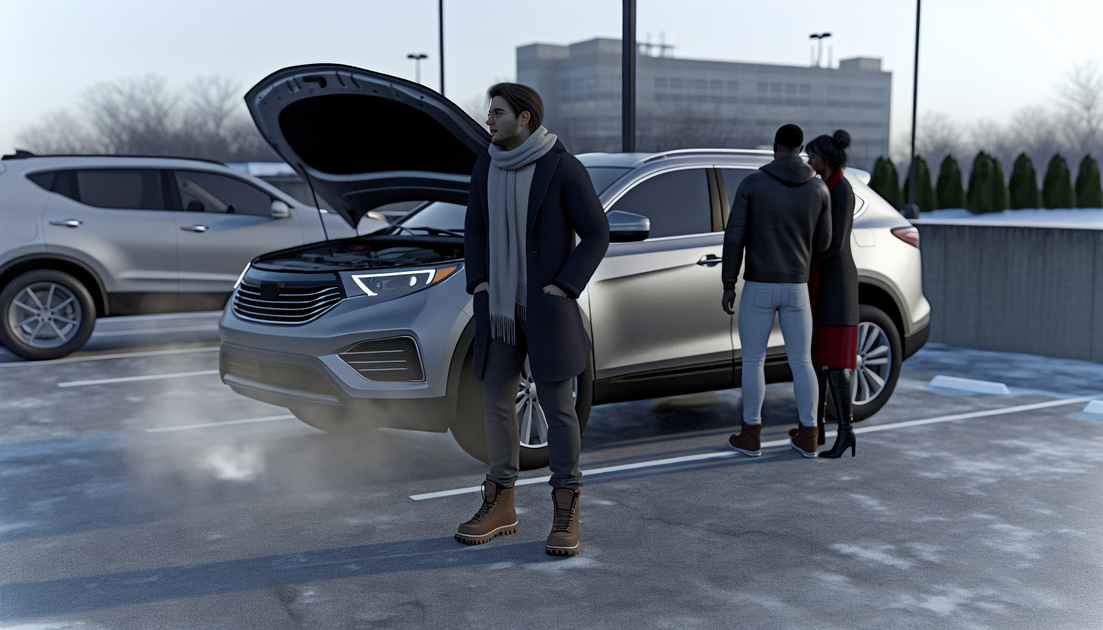
It’s easy to assume that scams happen mostly to buyers, not sellers. But the story of one vehicle buyer scam shared on Reddit flips that expectation on its head. A man trying to sell his aging Toyota Highlander met a couple who seemed genuinely interested. Within an hour, his car appeared to have developed a catastrophic engine failure. By the end of the week, he discovered nothing was wrong at all—except that someone had tampered with the vehicle to drive down its price.
The Old Game, Updated for Facebook Marketplace
Private car sales have always required a certain level of trust. Decades ago, that trust was built in driveways and parking lots, often sealed with a handshake. Now it unfolds in chat windows and DMs. Platforms like Craigslist and Facebook Marketplace have democratized the buying and selling of cars—anyone can list one, anyone can inquire—but they’ve also blurred the boundaries between legitimate buyers and opportunists.
In this particular case, the seller’s Highlander had over 230,000 miles but was running strong. A couple arrived for a test drive, acting enthusiastic and knowledgeable. During the drive, they pointed out smoke from the exhaust and, later, oil on the engine. They claimed the car had a blown head gasket and offered to buy it “as is” for cheap. Fortunately, the seller refused. After taking the car to a mechanic, he learned that nothing was wrong—someone had simply loosened a sensor and poured oil under the hood to simulate a leak.
It’s a story that sounds almost theatrical, but it illustrates a broader shift. Scams are evolving to exploit not only technological vulnerabilities but also social expectations: politeness, trust, and pressure to close a deal quickly. The “buyer” scam flips the usual narrative by making the seller question their own honesty or competence.
How the Vehicle Buyer Scam Works
The mechanics of this scam are straightforward but effective. A scammer responds to a car listing and arranges an in-person meeting. During the test drive, they may subtly sabotage something—loosening a sensor, disconnecting a hose, or even pouring oil in visible places. When the car shows “problems,” they feign disappointment but then offer to buy it immediately at a steep discount. If the seller doubts their own knowledge or feels pressured, they might accept.
What makes this particularly insidious is that it plays on the seller’s desire to be fair. No one wants to unload a broken car on someone. And in that moment of uncertainty—engine light glowing, the buyer shaking their head sympathetically—it’s easy to imagine a seller lowering the price just to move on.
In my own experience selling used cars, that emotional moment is where mistakes happen. You want the interaction to feel smooth, to prove you’re an honest person. But emotional comfort can be a poor substitute for verification. A quick mechanic check or even a diagnostic scan can save thousands of dollars—or, in this case, protect you from being manipulated.
Everyday Vulnerabilities in Private Car Sales
Scenarios like this one expose how vulnerable informal economies can be. Most private car sales rely on an unspoken social contract: honesty, transparency, and good faith. There’s no clerk overseeing the transaction, no standardized inspection, no buyer-seller protection policy. It’s two people agreeing to trust each other in a parking lot.
Here’s a small, realistic scene: last summer, a friend of mine sold her old Honda Civic to a college student she met online. They met in a grocery store lot. The student’s dad joined the test drive, and within minutes they were under the hood, nodding approvingly. The sale went smoothly, but afterward she admitted how anxious she’d been—half expecting a scam, half afraid of offending someone by showing that distrust. That tension is the quiet tax of doing business in the online marketplace era.
It’s not that scams are new. Car “flippers” and con artists have existed as long as cars themselves. What’s new is how easy it’s become to reach potential victims. A single social media post can bring dozens of strangers to your inbox, each one a potential buyer—or something else entirely.
Online platforms have tried to mitigate this with safety tips and verification badges, but enforcement is inconsistent. Many accounts vanish after a scam attempt, as happened in the Highlander case. The buyer’s Facebook account was deactivated within days, leaving no trace and little recourse for the seller.
Protecting Yourself from a Vehicle Buyer Scam
While there’s no foolproof system, sellers can reduce their risk significantly with a few precautions:
- Meet in public, monitored areas. Many police departments now offer “safe exchange” zones with cameras.
- Keep control of the vehicle. Don’t let potential buyers drive alone. Ride along or have a friend present.
- Inspect after test drives. Before parting ways, pop the hood and check for new leaks or loose components.
- Document the meeting. Keep screenshots of messages and note license plate numbers if possible.
- Trust hesitation. If something feels off—too much urgency, too much emotion—pause. Scammers rely on speed and sympathy.
Many legitimate buyers are equally nervous, so clear communication helps both sides. Setting boundaries upfront—like “I’ll accompany you for the test drive” or “I plan to have my mechanic verify everything afterward”—can deter bad actors without alienating genuine buyers.
Still, no checklist can guarantee safety. Even experienced sellers can be caught off guard. What matters most is not assuming that goodwill will automatically be returned. The internet has expanded opportunity, but it hasn’t changed human nature.
The Broader Lesson About Trust and Vigilance
Stories like this are about more than cars. They’re about how we navigate trust in a digital economy that often feels personal but isn’t. Online platforms simulate community—they show you someone’s name, a smiling profile picture, maybe mutual friends—but the underlying relationship is transactional. That illusion of intimacy makes scams more effective because it lowers our defenses.
I’ve noticed a cultural tension here: we’re told to be both open and cautious, transparent yet skeptical. Selling a used car, renting a room, even listing furniture all require that delicate balance. Too much suspicion and you alienate honest people; too little and you risk being taken advantage of.
For all our technological progress, the weakest link remains the same—human trust. No algorithm can fully protect it, and no platform can guarantee it. What we can do is approach these interactions with a kind of grounded skepticism: friendly, but alert; open, but aware that not everyone means well.
Looking Ahead
The rise of peer-to-peer sales won’t slow down anytime soon. If anything, economic pressures are pushing more people to buy and sell directly. This means scams will keep evolving, becoming subtler and more personal. Perhaps future platforms will integrate better identity verification or require escrow-based transactions. But even then, the old adage will stand: verify, don’t assume.
The seller in Greensboro, North Carolina, was lucky. He trusted his instincts, got a second opinion, and avoided losing a valuable car. Not everyone will be so fortunate. His story now circulates online as a warning—but also as a small reminder that vigilance still matters more than technology.
In the end, the best defense isn’t paranoia. It’s patience. Slow down the interaction, double-check the facts, and remember that trust, once broken—even briefly—takes a long time to rebuild.
Leave a Reply