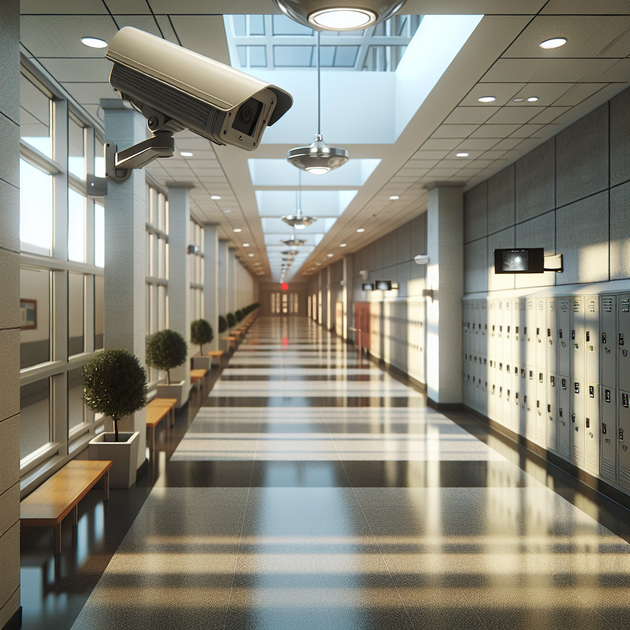
If you’re a parent or teacher hearing about AI-powered school surveillance, it’s worth pausing before the next PTA meeting. This technology promises safer campuses—but it also quietly reshapes what “safety” feels like for students. In the next hour, you can look up what’s being installed in your district and ask how that data will be used.
What’s changing in schools right now
Across the United States, more schools are layering artificial intelligence into their security systems—facial recognition at entrances, drone patrols after hours, and even “smart” microphones meant to detect bullying or fights in bathrooms. It’s a major shift from traditional cameras that just recorded video. Now the software flags “unusual behavior” in real time.
This rollout is happening fast because hardware prices have dropped and vendors pitch turnkey packages that plug into existing networks. Federal safety grants and local fears after high-profile incidents also accelerate adoption. But there’s a cultural cost no one fully priced in yet: students say they feel watched even when they’re not doing anything wrong.
In surveys cited by civil liberties groups, nearly a third of teens reported feeling constantly monitored at school. Some even hesitate to report personal issues—like anxiety or family abuse—because they worry those conversations might be recorded or misinterpreted by an algorithm trained on tone of voice.
How AI-powered school surveillance actually works
Let’s break down how these systems typically operate behind the scenes:
- Step 1: Cameras and sensors capture live feeds—video at doors, audio in hallways, sometimes motion data from smart lights.
- Step 2: The footage streams to cloud software trained on patterns such as crowding, running, or loud noises.
- Step 3: The system assigns a “risk score” or triggers alerts when activity falls outside normal parameters.
- Step 4: Human staff—security officers or administrators—review those alerts through a dashboard that highlights clips needing attention.
- Step 5: Data often gets stored for weeks or months for “training improvements,” raising questions about who can access it later.
The idea sounds efficient—like having thousands of extra eyes that never blink—but efficiency isn’t the same as wisdom. Algorithms can misread context. A student rushing to class might look like someone fleeing trouble; loud laughter could register as aggression.
A hallway story that says it all
Picture a Monday morning at Lincoln High. A group of juniors jokes around near their lockers; one tosses a backpack too hard and it thuds against a wall. An alert pops up on the assistant principal’s tablet labeling it “possible altercation.” Within minutes two staff members arrive asking questions nobody expected.
The incident ends quietly—but everyone involved walks away more cautious. Weeks later, teachers notice those same students talking less between classes. It’s not rebellion; it’s self-censorship born from uncertainty about who—or what—is listening.
The trade-offs no one likes to talk about
The big promise behind these tools is prevention: stopping fights before they escalate or spotting intruders before harm occurs. But prevention is only half the equation. Trust—the invisible glue of any learning environment—is the other half.
Critics argue that when every move is logged and analyzed, kids start acting like suspects instead of learners. That shift changes how they relate to teachers and counselors. An American Civil Liberties Union focus group found students were less likely to seek help for depression once microphones appeared in restrooms labeled “safety devices.”
A contrarian view comes from some district officials who say data proves incidents drop after installing these systems. They claim fewer hallway scuffles and faster emergency responses justify the approach. Both things can be true: immediate security might improve while long-term well-being erodes if oversight isn’t transparent.
The nuance lies in design and governance. Technology itself isn’t inherently invasive—it’s how institutions use it that determines whether it protects or alienates people. A camera with clear signage and strict deletion timelines feels different from an unmarked sensor humming above a bathroom mirror.
Limits and pitfalls (and how to manage them)
No tool works flawlessly in messy human environments like schools. Facial recognition accuracy drops for younger faces because training datasets skew toward adults. Audio analysis tools can confuse shouting at a pep rally with conflict detection triggers. When false positives pile up, staff start ignoring alerts—the classic boy-who-cried-wolf effect—but real threats could slip through unnoticed.
The other pitfall is data drift over time. Once information exists on servers, new uses inevitably appear: maybe sharing clips with law enforcement during investigations or retraining future algorithms without fresh consent forms. Even anonymized data can sometimes be re-identified when combined with attendance records or Wi-Fi logs.
To mitigate these issues, experts recommend strict retention schedules—delete raw footage within days unless there’s an ongoing case—and regular audits by independent privacy boards. Some schools pilot advisory panels including parents and students to review policies before upgrades roll out.
Quick wins for concerned readers
- Ask direct questions: Contact your district’s technology office about where sensors are placed and how long data lives.
- Check contracts: Public procurement documents often reveal vendor terms that specify storage or third-party access rights.
- Push for opt-in transparency: Advocate for visible signage explaining each device’s purpose instead of vague “security enhancements.”
- Encourage balanced metrics: Request reports measuring not just incident counts but also student trust surveys over time.
- Teach digital literacy: Help students understand both their rights and responsibilities around digital monitoring spaces.
The bigger question behind AI-powered school surveillance
This debate isn’t really about gadgets—it’s about values baked into everyday infrastructure. A school can either treat technology as a shield between people or as a bridge connecting them more safely. Each camera installed is also a statement about how much we believe safety depends on watching versus understanding.
If innovation keeps sprinting ahead of reflection, we risk training children to see observation as normal rather than exceptional—a cultural habit that’s hard to unlearn later in life.
The next time your local board proposes another round of sensors or “behavior analytics,” ask this simple question: What kind of trust do we want our schools to teach?
Leave a Reply