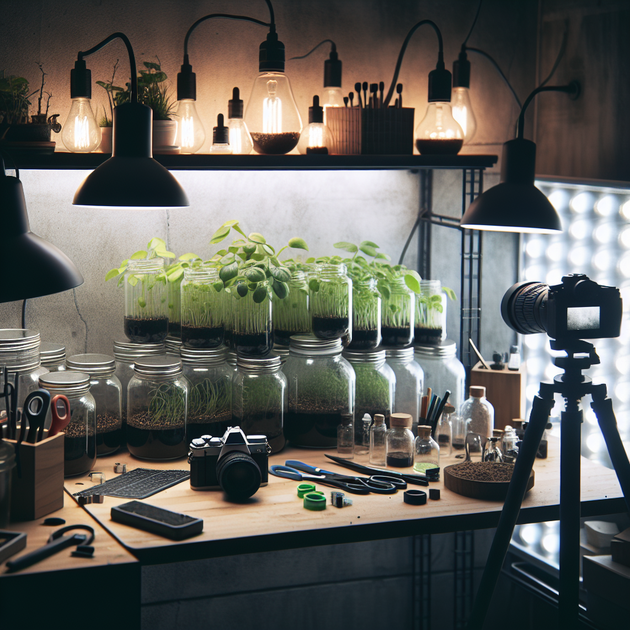
It started as a casual upload—a YouTuber in their garage showing viewers how to replicate a prized variegated houseplant using a surprisingly simple lab setup. Within days, the video had millions of views and comments from hobbyists around the world trying it for themselves. The result? The rare plant market, once defined by scarcity and exclusivity, saw its prices crash almost overnight.
How Technology Exposed the Fragility of Rarity
For years, collectors have treated certain plants like small works of living art. A single cutting of a rare monstera or philodendron could fetch hundreds or even thousands of dollars online. What held those prices high wasn’t just beauty—it was biology. Propagating these plants was slow, risky, and often required specialized conditions.
The YouTuber’s method changed that equation instantly. Using off-the-shelf materials—sterile jars, nutrient gel, and LED grow lights—they demonstrated how to clone expensive plants at home with near-perfect success rates. It wasn’t new science; tissue culture has existed for decades in professional labs. What was new was accessibility. Anyone with patience and a steady hand could now multiply plants that were once locked behind commercial greenhouses.
I’ve seen this kind of democratization before in other niches—3D printing did something similar to small-scale manufacturing. When you remove friction and gatekeeping from a process, markets built on rarity begin to wobble.
The Core Mechanic Behind Plant Cloning
If you want to understand what really happened, look at the technique itself. Plant cloning is essentially controlled regeneration. You take a small piece of tissue—often just a few cells—from a healthy specimen and place it in a sterile growth medium containing nutrients and hormones. The tissue forms callus cells, then roots and shoots under precise conditions of light and moisture.
Do this correctly and you can produce genetically identical copies indefinitely. Do it sloppily—skip sterilizing tools or mishandle humidity—and you’ll end up with mold instead of leaves. That’s where most beginners stumble.
The viral video walked through each step clearly: mix the medium, sanitize everything with alcohol, seal jars tightly to prevent contamination, and keep temperature stable around 25°C. The process looked so simple that viewers underestimated its precision—but enough succeeded to flood online marketplaces with cloned stock within weeks.
Common Mistakes to Avoid
- Rushing sterilization: Even one unclean blade can ruin dozens of samples.
- Ignoring light balance: Too much light bleaches young tissues; too little stalls growth.
- Reusing contaminated medium: Always discard suspect batches rather than “see if it still works.”
Follow these basics faithfully and you can propagate nearly any compatible species efficiently. Ignore them, and you’ll learn why professionals use glove boxes and filtered air systems.
A Micro Story From the Fallout
A collector I spoke with—let’s call her Mina—had invested heavily in variegated alocasias before the video went viral. Within two weeks of its release, listings that once sold out in hours sat untouched for days. “I had eight plants I thought were part of my retirement plan,” she said with a rueful laugh. “Now everyone has them.” She eventually started selling starter kits for home propagation instead of finished plants—a pivot that kept her business alive.
Mina’s story isn’t unusual. Many small growers who depended on exclusivity had to rethink their models overnight. Some leaned into education; others shifted toward breeding entirely new hybrids instead of reselling existing ones.
Limits of the DIY Revolution in the Rare Plant Market
This wave of home propagation feels unstoppable right now, but it has boundaries. Not every species responds well to tissue culture; some require highly specific hormone balances or environmental cues that amateurs rarely nail on the first try. There’s also the ethical side—cloning endangered or patented varieties without permission crosses into murky territory.
In my own testing with more common species like pothos and calathea, results varied wildly depending on local water chemistry and sterilization technique. What worked perfectly for one viewer might fail completely for another due to minor differences in environment or materials. That variability keeps professional growers relevant even as hobbyists gain power.
Another nuance worth noting is how digital virality accelerates both knowledge and chaos. Once something spreads on social platforms, corrections or warnings rarely travel as far as the initial excitement does. Many beginners underestimated ongoing care costs—electricity for lights, nutrients for refills—and ended up abandoning jars halfway through growth cycles.
What This Teaches About Tech Disruption
The story mirrors countless others where information technology collapses scarcity-based markets overnight—from NFTs to luxury fashion reselling communities. When specialized knowledge becomes open-source through platforms like YouTube or Reddit, traditional hierarchies fall apart quickly.
If you’re entering any niche built around rarity or expertise, plan ahead for transparency shocks like this one:
- Document your unique value: Share not just your product but your process insightfully so audiences see your craft as more than replication.
- Diversify early: Don’t rely solely on one “holy grail” item; trends shift faster than supply chains adapt.
- Anticipate imitation: Assume your best ideas will spread—and design business models resilient to that fact.
The same advice applies outside horticulture too. Whether you design sneakers or code software plugins, assume that anything reproducible will be reproduced once it hits public view.
A Realistic Reflection on Progress
This episode doesn’t signal the end of collecting or cultivation—it signals evolution. When barriers drop, creativity often rises to fill the space left behind. We may soon see an explosion of citizen breeders experimenting with traits no company would bother developing commercially.
I find something oddly optimistic about that shift. Yes, some people lost money when prices fell—but many more gained access to beauty they could never afford before. As one commenter put it online (and I’m paraphrasing): knowledge wants to grow just like plants do—it spreads wherever there’s light and room.
The rare plant market will recover in some form; it always does after correction cycles. But it won’t look quite the same again—and perhaps that’s progress disguised as disruption.
Leave a Reply